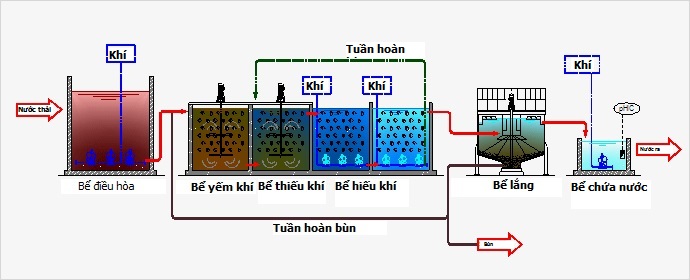
The operating principle of MBBR technology
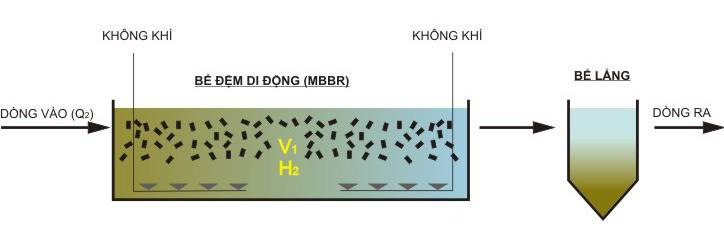
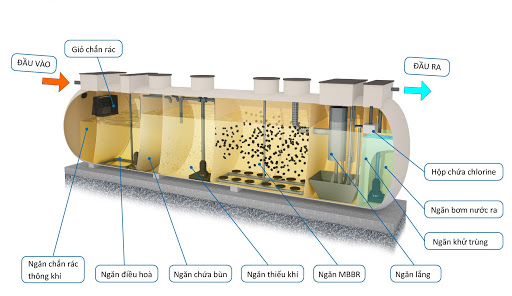
Wastewater is pumped into the MBBR tank. The media are evenly distributed throughout the tank and kept suspended by a stirring or aeration system. Microorganisms in the wastewater adhere to the surface of the media, forming a biofilm. This biofilm contains bacteria capable of decomposing organic matter and other pollutants.
As wastewater flows through the tank, pollutants come into contact with the biofilm and are broken down by microorganisms. This process occurs continuously, and the treatment efficiency increases as the biofilm grows thicker.
After passing through the MBBR tank, the treated wastewater will continue to flow through sludge and water separation systems. Biological sludge will be removed, and clean water will be discharged or further treated if necessary.
Scope of application
MBBR technology is widely used in many different fields due to its efficient and flexible treatment capabilities. Below are some of the main application areas of MBBR tanks:
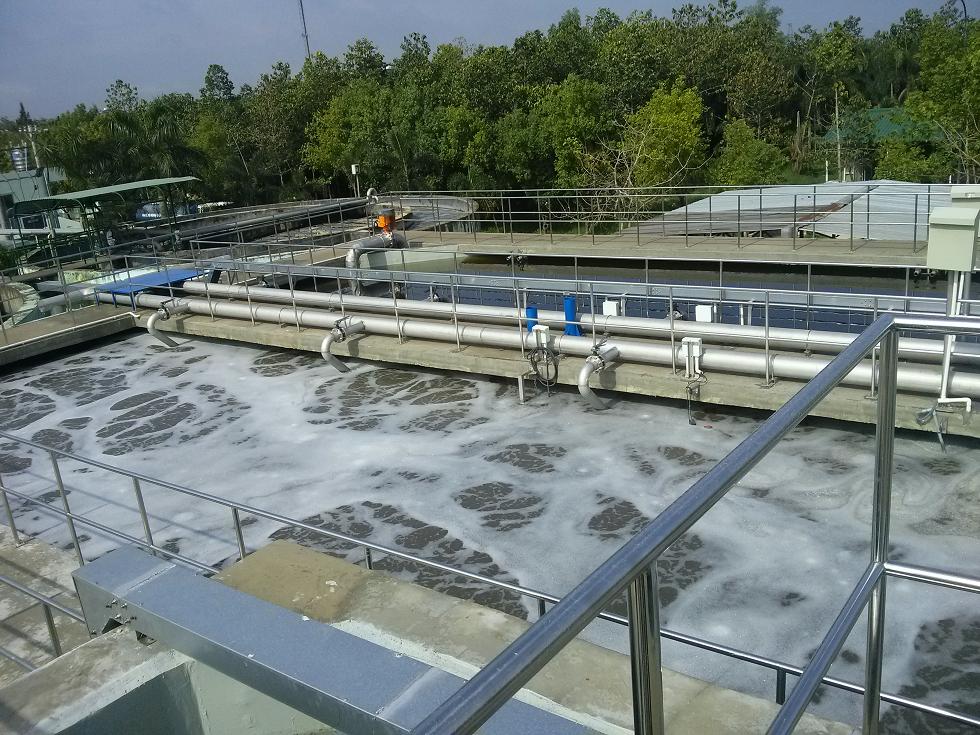
The scope of application of the technology is quite high.
Industries such as food processing, textile dyeing, chemicals, paper, and petroleum all utilize MBBR technology for wastewater treatment.
Urban areas, residential areas, hospitals, and other public facilities often apply MBBR to treat domestic wastewater.
MBBR is also used to treat contaminated groundwater and surface water.
What are the requirements for applying MBBR wastewater treatment technology?
Biofilm
Biofilm is a core element in MBBR technology, where microorganisms grow and decompose pollutants. The substrate must have a large surface area, high durability, and good abrasion resistance to provide an optimal environment for microbial growth. Temperature, pH, and dissolved oxygen concentration in the wastewater must be controlled and maintained at appropriate levels for the microorganisms to thrive and function effectively.
Flow structure
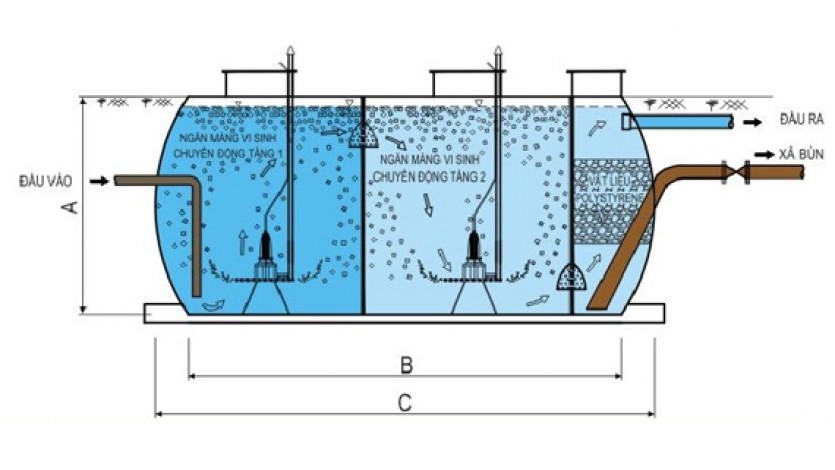
Flow structure of MBBR wastewater treatment technology
The flow structure in an MBBR tank plays a crucial role in ensuring the even distribution of wastewater and media, as well as optimizing the treatment process. Wastewater must be maintained in a continuous and steady flow to ensure that the media remain suspended and microorganisms can effectively come into contact with pollutants.
Air supply system of MBBR wastewater treatment technology
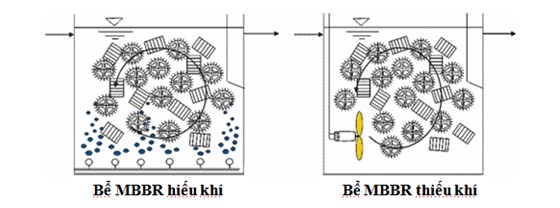
The gas supply system of the technology
The aeration system must ensure sufficient oxygen supply for microbial respiration, while also being able to adjust the air volume according to actual needs. The aeration system should be designed to create small air bubbles, increasing the contact area between air and water, and optimizing the dissolution of oxygen into the wastewater.
Properties and quantity of substrate
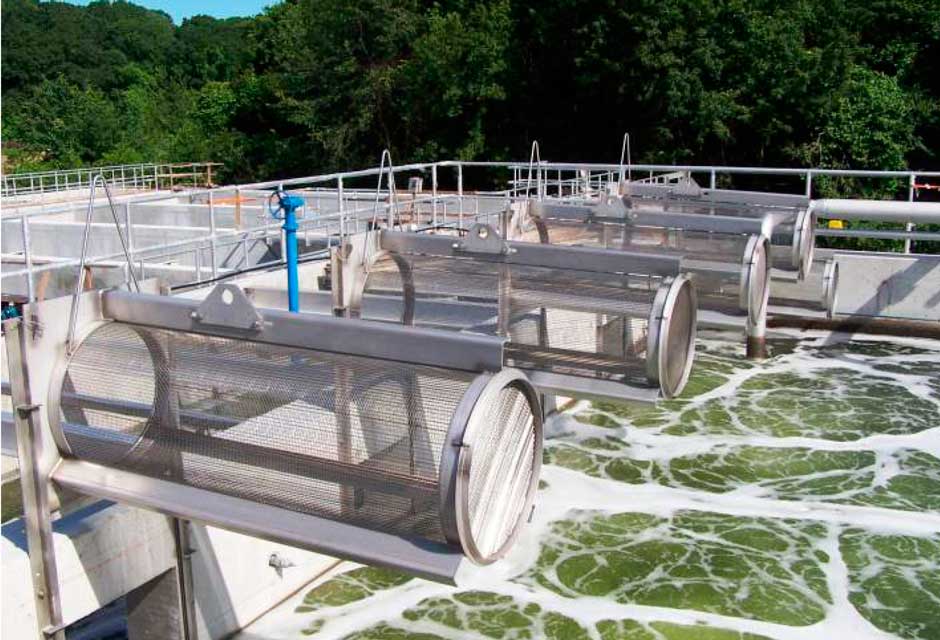
Wastewater treatment tank using MBBR technology
The substrate is a crucial element in increasing the surface area for microbial growth. To effectively apply MBBR technology, attention must be paid to the quality of the substrate. The substrate is typically made from high-strength plastic that can withstand wastewater environments and maintain stable physical and chemical properties over a long period.
The amount of media must be calculated based on the flow rate and characteristics of the wastewater. The proportion of media in the tank must be large enough to ensure sufficient surface area for microorganisms but not so large as to cause clogging and reduce treatment efficiency.
Advantages of wastewater treatment using the MBBR method
MBBR wastewater treatment technology is becoming increasingly popular due to its many highly valued advantages.
The advantages of technology
-
The MBBR method is capable of effectively decomposing organic matter and pollutants in wastewater thanks to the large surface area of the media, creating favorable conditions for microorganisms to thrive.
-
It can treat a wide variety of wastewater types, from domestic wastewater and industrial wastewater to wastewater containing complex organic compounds.
-
MBBR systems require a smaller installation area compared to traditional treatment technologies, thanks to the optimization of surface area through the use of movable media.
-
Because of the low energy requirements for aeration and mixing, MBBR helps save on operating costs.
-
MBBR systems can be easily expanded or upgraded by adding media to the reactor tank, without needing to change the basic system design.
-
Thanks to its efficient treatment capabilities, MBBR helps minimize the amount of pollutants released into the environment, contributing to the protection of natural water resources.
Disadvantages of MBBR technology
Although MBBR wastewater treatment technology offers many advantages, it still has some drawbacks.
Disadvantages of MBBR wastewater treatment technology
-
MBBR technology requires investment in specialized equipment and materials such as media, mixing and aeration systems, resulting in potentially higher initial investment costs compared to some traditional treatment technologies.
-
Ensuring the media operates efficiently and without clogging can be complex, requiring regular monitoring and maintenance to sustain treatment performance.
-
The effectiveness of MBBR systems depends heavily on environmental factors such as temperature, pH, and dissolved oxygen concentration. Large variations in these conditions can affect microbial activity and treatment efficiency.
-
Although MBBR is effective in treating many types of wastewater, it may struggle to treat specific pollutants such as heavy metals or chemical compounds that are not readily biodegradable.
-
Aeration systems in MBBRs consume a significant amount of energy, especially in large systems. This can increase overall operating costs, particularly in areas with high energy costs.
Above is all the information about MBBR technology that Minh Dat wants to provide you. If you have any questions, please contact us for more detailed advice. MBBR technology is widely applied in wastewater treatment processes due to its high stability; you may want to consider choosing it.