What is an SBR tank?
Sequencing Batch Reactor (SBR) tanks are one of the advanced wastewater treatment technologies widely applied worldwide. This is a batch biological treatment system that allows wastewater treatment processes to be carried out in a single tank through multiple sequential operating phases. With its simple structure and high efficiency, the SBR tank has become the top choice in wastewater treatment plants.
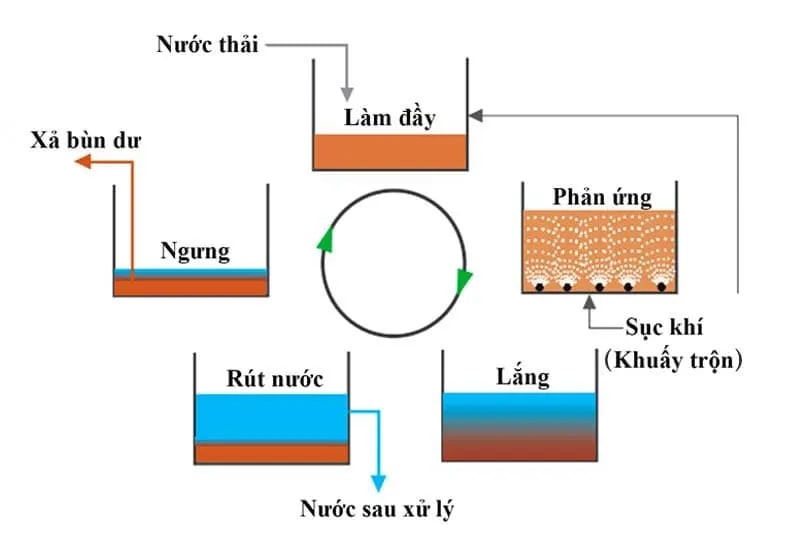
SBR tanks are designed to integrate multiple biological wastewater treatment processes, handling wastewater containing high concentrations of organic compounds and nitrogen.
Structure of an SBR tank
The SBR tank is composed of the following main components:
-
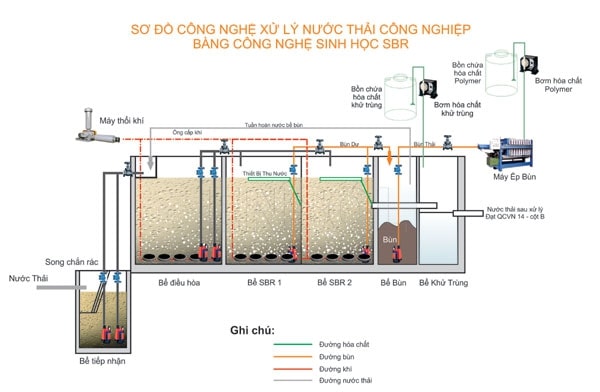
The reactor is the most important component in an SBR system, where all wastewater treatment processes take place. Reactors are typically made of concrete or stainless steel, capable of withstanding the harsh conditions of wastewater treatment. The size and capacity of the reactor are designed based on the wastewater flow rate and treatment needs of each specific area.
-
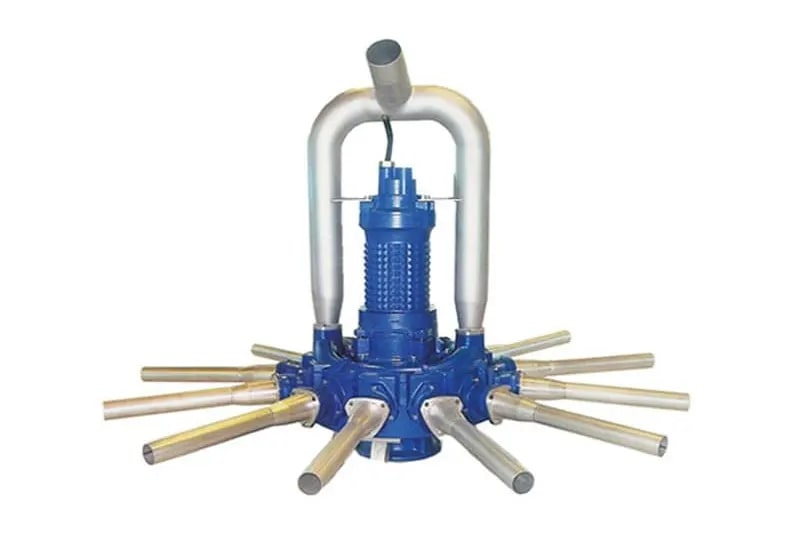
The aeration system is an integral part of the SBR tank, ensuring sufficient oxygen supply for the biological oxidation process. This system includes aerators and air ducts, which help distribute oxygen evenly throughout the tank. Aerators are usually installed at the bottom of the tank, creating small air bubbles that increase the contact area between oxygen and wastewater, thereby optimizing the treatment process.
-
The discharge system in an SBR tank is designed to release treated water after each operating cycle. This system includes discharge valves and pipes, ensuring that the treated water is discharged efficiently and safely. The discharge valves are usually automatically controlled, allowing for precise and effective management of the discharge process.
-
The automatic controller is the central unit that manages and controls the operational phases of the SBR tank. This controller typically uses sensors to monitor operating parameters such as water level, oxygen concentration, pH, and temperature.
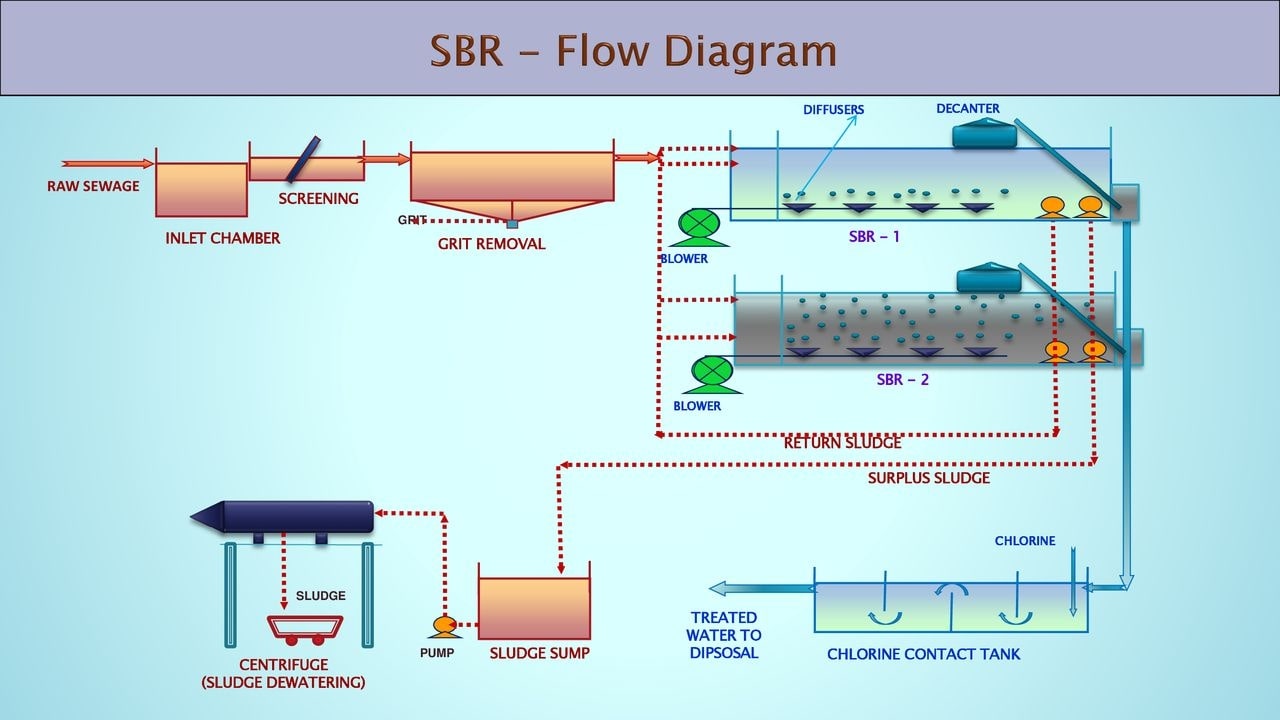
Each controller in the SBR tank structure has its own specific function. They work together and coordinate with each other.
How to calculate the SBR tank in wastewater treatment.
The calculation of an SBR (Sequence Batch Reactor) tank in wastewater treatment involves the following main steps and parameters:
Collect input data
-
Average wastewater flow rate (Q)
-
BOD5 concentration, COD, and other pollutants requiring treatment.
-
The quality of treated wastewater must meet prescribed standards.
-
The concentration of activated sludge (MLSS) in the tank is typically chosen to be between 1500 and 5000 mg/l.
-
Sludge retention time (SRT) typically ranges from 10 to 30 days, with 15 days being the most common.
-
The sludge volume index (SVI) is approximately 120-150 ml/g.
-
The Y cell production coefficient is approximately 0.4–0.8 mg VSS/mg BOD5.
-
Wastewater temperature, pH, and other environmental conditions.
Determine the number of SBR tanks.
Typically, ≥ 2 tanks are selected to ensure continuous operation, alternating between filling, reaction, settling, draining, and resting phases.
Determine bCOD, nbCOD, and nbSS.
-
The bCOD content is calculated using the following formula:
bCOD = 1.65 x BOD5 (units mg/l)
This value indicates the amount of oxygen required for the biodegradation of organic matter in wastewater.
-
The nbCOD content is calculated by subtracting nCOD from COD, i.e.:
nbCOD = COD – nCOD (mg/l)
This is the portion of COD that is not biodegradable.
-
The nbSS content is calculated using the following formula:
nbSS = (TSS x MLVSS) / MLSS (1 – 0.68) (mg/l)
The parameters are explained as follows:
-
TSS: Total suspended solids input, in mg/l. Of which approximately 68% is biodegradable suspended solids.
-
MLVSS: Volatile suspended solids content in the tank, expressed in mg/l. This is the portion of microorganisms that can be burned when heated to high temperatures.
-
MLSS: Total suspended solids content in the tank, in mg/l.
Determine the operating cycle of the SBR tank.
The tank filling time is determined by the formula: tld = tpu + tl + tcn (in hours)
In there:
-
tld: Tank filling time (hours)
-
tpu: Reaction time (hours)
-
tl: Settling time (hours)
-
tcn: Draining time (hours)
The total operating time of a cycle (Tck) is calculated as: Tck = tld + tpu + tl + tcn (hours)
The number of operating cycles in a 24-hour period is calculated as follows: n1 = 24 / Tck (cycles)
The amount of water needed to fill one cycle is calculated as: Vld = Q / n2 (m³)
In there:
-
Q: Wastewater flow rate (m³/day)
-
n2: Number of cycles of the two SBR tanks (n2 = n1 x 2), calculated in cycles.
Determine the dimensions of the SBR tank.
The calculation content includes:
-
Calculate the volume of the SBR tank, denoted as VT.
-
Calculate the construction height of the tank, denoted as Hxd.
-
Calculate the surface area of the tank, denoted by F.
Operating principle of SBR wastewater treatment tanks
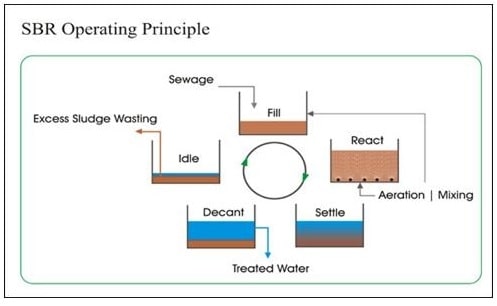
SBR tanks operate based on batch biological wastewater treatment technology, divided into specific operating phases.
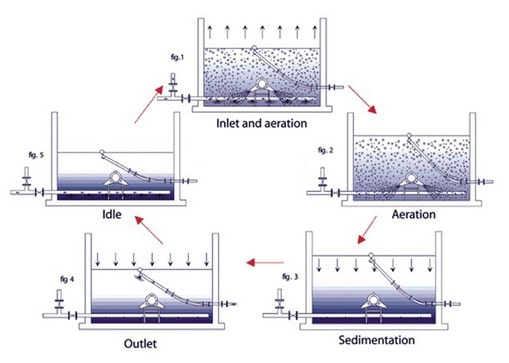
Each phase has its own role and function, helping to optimize the processing.
Fill phase
During this phase, wastewater is introduced into the treatment tank for a period of 1 to 3 hours. The wastewater carries organic matter and nutrients necessary for microbial growth. Simultaneously, processes such as:
-
Thickening – static: helps concentrate microorganisms.
-
Mixing: thoroughly mix the wastewater and activated sludge.
-
Aeration: provides the necessary oxygen for microorganisms to thrive.
As a result, microbial reactions occur effectively right from the moment the wastewater is received.
When water is added to the fill phase, a large amount of food for the microorganisms – the activated sludge – is also present.
React phase
Once the tank is filled, the aeration system will begin operating. Oxygen is supplied to support the biological oxidation process, in which microorganisms use oxygen to break down organic matter and convert it into CO2 and water. The aeration phase is the most critical stage in the process, determining the treatment efficiency of the SBR tank.
This phase provides a continuous supply of oxygen and stirs the mixture in the tank in order to:
-
Microorganisms enhance the decomposition of organic matter.
-
Ensure that biochemical reactions proceed smoothly in an aerobic environment.
-
The nitrification process transforms ammonium (NH3) into nitrite (NO2) and finally into nitrate (NO3), reducing the toxicity of nitrogen in wastewater.
-
The aeration phase helps improve water quality and increase treatment efficiency.
During the aeration process, nitrogen is removed, transforming from N – NH3 to N – NO2 and quickly into N – NO3.
Settle phase
After the biological treatment process is complete, the tank switches to the sedimentation phase to separate the sludge from the wastewater.
-
The tank is kept in a static state, without stirring or aeration.
-
Solids and activated sludge settle to the bottom of the tank.
-
The settling process takes about 2 hours to ensure maximum sludge concentration.
This stage helps recover activated sludge and clarify wastewater before discharging it into the environment.
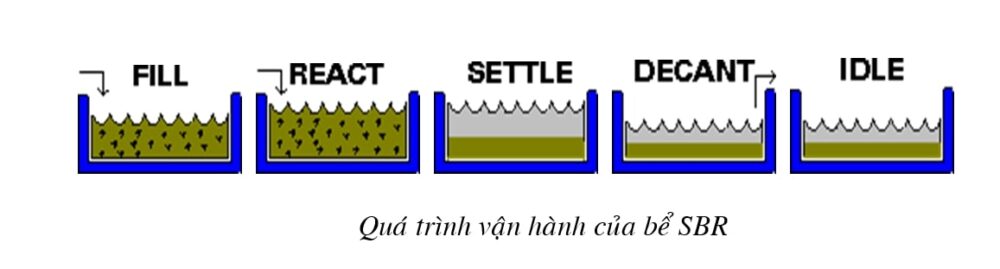
The settling phase helps separate the clear water from the sludge, preparing it for the discharge stage.
Draw phase
After the water and sludge have been separated, the SBR tank moves to the draining phase. The clear water from the top of the tank is discharged through the drain system.
-
Treated wastewater is recovered for discharge or reuse.
-
This process ensures that the water meets standards before being discharged into the environment.
-
The draining phase concludes the SBR tank operating cycle and prepares it for the next treatment cycle.
The wastewater must meet quality standards before being discharged into the environment or used for other purposes.
Idle Phase
The Condensation Phase is the final stage in the operating cycle of an SBR tank. This is also the time for maintenance and inspection of equipment, ensuring the tank operates stably and efficiently.
-
This is the time for maintenance, cleaning, and inspection of the equipment in the tank.
-
This phase helps ensure the tank operates stably and efficiently in subsequent treatment cycles.
-
During the settling phase, the tank does not receive or treat wastewater but focuses on maintaining and preparing for the next cycle.
During the Resting phase, the tank is kept in a static state in preparation for the next operating cycle.
The nitrogen removal cycle in wastewater from an SBR tank.
The process of nitrogen removal in wastewater from SBR tanks is carried out through two main stages: nitrification and denitrification.
Phase 1: Nitrification
In this process, Nitrosomonas and Nitrobacter bacteria use oxygen to convert ammonia (NH4) in wastewater into nitrite (NO2-) and then nitrate (NO3-). This process is divided into two steps:
Nitrosomonas (nitrite derived from ammonia):
NH4 + 1.5 O2 → NO2- + H2O + H+
Nitrobacter (Nitrate is metabolized from Nitrite):
NO2- + 0.5 O2 → NO3-
This stage takes place during the aeration phase, when the amount of dissolved oxygen in the water is sufficient for the bacteria to carry out the oxidation process. The presence of oxygen is a crucial factor, enabling these bacteria to function effectively.
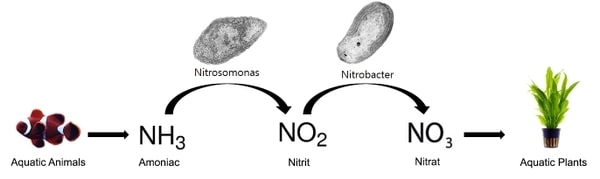
The nitrogen cycle is described in an easy-to-understand way.
Phase 2: Denitrification
The denitrification process takes place under oxygen-deficient (anaerobic) conditions, where denitrifying bacteria use nitrate as an oxygen source to break down organic matter.
Nitrite is converted from nitrate, which is then further converted into nitrogen gas (N2):
NO3- → NO2- → NO → N2O → N2
The final result is that nitrate is converted into nitrogen gas (N2) and released into the environment, preventing the accumulation of nitrate in wastewater. This stage usually takes place during the settling and condensation phases, when the oxygen level in the tank is reduced to a minimum, creating favorable conditions for nitrate-reducing bacteria to function.
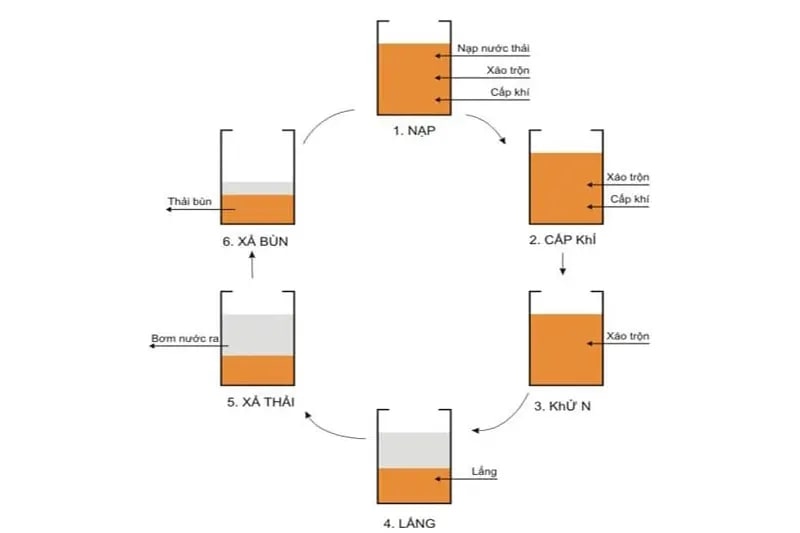
This describes the denitrification cycle concisely, yet comprehensively and thoroughly.
Advantages and disadvantages of SBR tanks
SBR tanks have many outstanding advantages, but they also have some disadvantages that need to be considered.
Advantage
-
High treatment efficiency: SBR tanks are capable of effectively treating wastewater, removing up to 90-95% of pollutants.
-
Flexible design: The timing and conditions for each operating phase can be adjusted to suit various types of wastewater.
-
Space-saving: SBR tanks perform multiple stages within a single tank, saving construction space.
-
Easy to operate and maintain: The automated control system facilitates easy management, minimizing operating and maintenance costs.
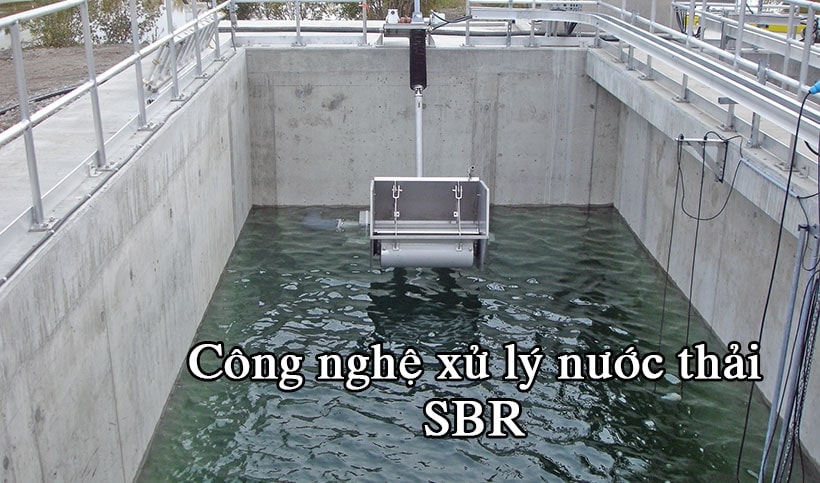
With SBR, organic impurities in water are removed to the maximum extent.
Disadvantages
-
High initial investment cost: Setting up an SBR tank system requires a significant initial investment.
-
High technical requirements: Requires advanced knowledge and technical skills to operate and maintain effectively.
-
Potential for clogging: If not operated properly, SBR tanks can become clogged due to sludge buildup.
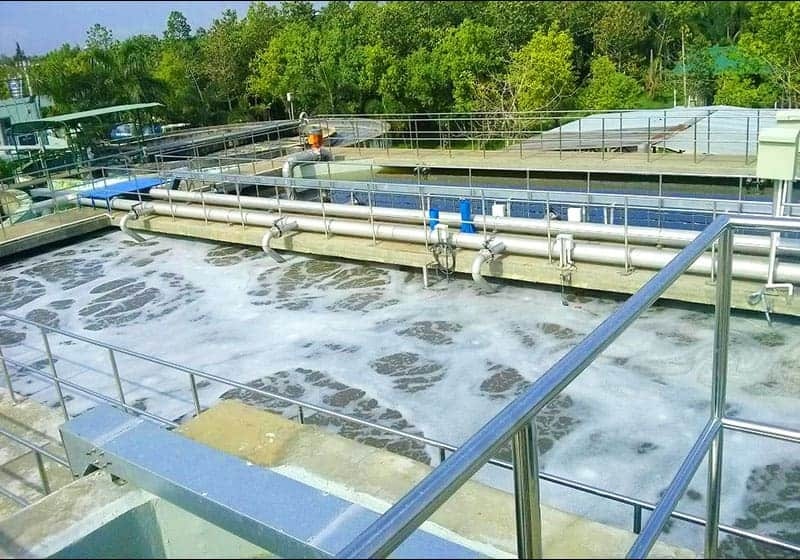
SBR wastewater treatment technology, an abbreviation for "Sequencing Batch Reactor".
Things you need to know
For SBR tanks to operate efficiently and sustainably, several important points need to be considered during the design and operation process.
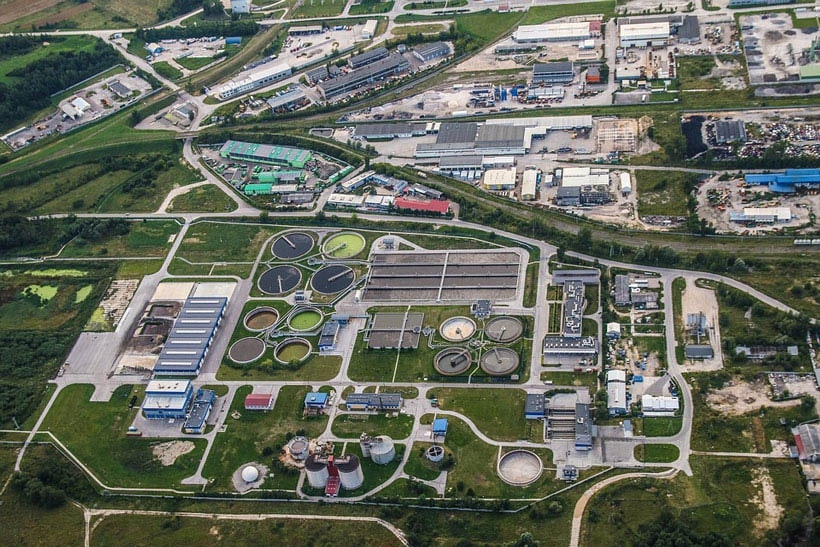
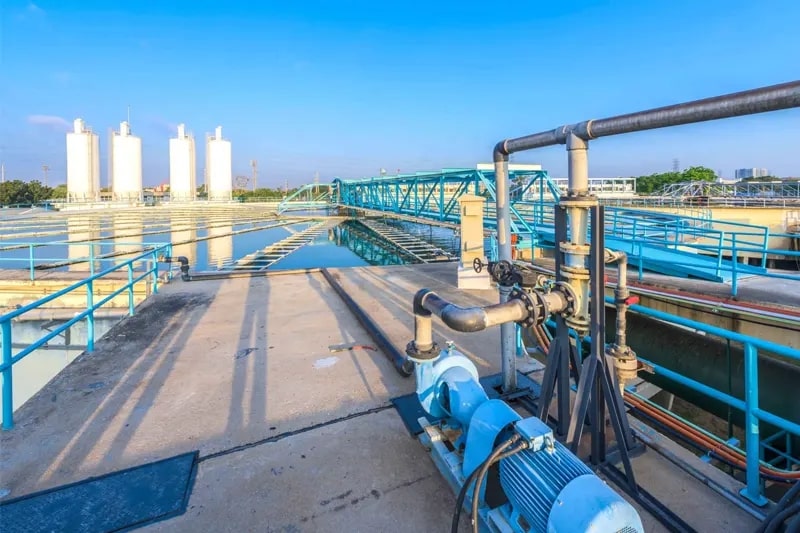
SBR wastewater treatment systems are large-scale and highly effective.
Calculating the cost of constructing an SBR tank.
When designing an SBR tank, it is necessary to accurately calculate the tank dimensions, aeration system, and operating time for each phase. This ensures that the SBR tank can handle the expected volume of wastewater and achieve maximum efficiency.
During operation
During operation, equipment should be regularly inspected to ensure the aeration system operates stably and is not clogged. Additionally, the quality of the effluent should be monitored, and the timing and conditions of each operating phase should be adjusted as needed.
During the nitrification process
The nitrification process requires sufficient oxygen and favorable conditions for Nitrosomonas and Nitrobacter bacteria. Maintaining appropriate levels of dissolved oxygen in the water and regularly monitoring operating parameters are essential to ensure efficient operation.
Summary
SBR tanks are an advanced wastewater treatment solution, offering high efficiency and operational flexibility. By understanding their structure, operating principles, and important considerations, you can maximize the use of this technology to protect the environment and improve wastewater quality. In the context of increasing wastewater treatment needs, SBR tanks are truly an indispensable technology. Hopefully, the information provided by Minh Dat has helped everyone gain a better understanding of SBR tanks.